Assorted Verbiage & Mappage
Verbiage
- Epitaph for the Once-Public, Once-Canadian CBC. Elvin Wyly and Jatinder Dhillon
- Subprime Cities: The Political Economy of Mortgage Markets edited by Manuel B. Aalbers, is almost out! We're flattered to have a chapter in this book, and one of my photographs was chosen for the cover illustration. Jatinder and I managed to steal a few hours in May, 2009, to drive through Ave Maria and then Lehigh Acres before we zipped over to RSW Airport and headed back home to Vancouver. That allowed me to update some of my urban-economic lecture notes, and to check out Lehigh Acres. My friend and mentor Peter Muller recommended I take a look at this place, a postindustrial, Floridian Levittown. Here's the caption I suggested for the image:
"Lehigh Acres, Florida, May 2009 (photograph by Elvin Wyly). This "town born of speculation," is profiled in a documentary film, "Dreams for Sale: Lehigh Acres and the Foreclosure Crisis" (Schillinger, 2011). In a New Yorker analysis of Florida as the "Ponzi State," George Packer muses, "In a place like Lehigh Acres ... where half the driveways are sprouting weeds, and where garbage piles up in the bushes along the outer streets, it's already possible to see the slums of the future."
Raymond A. Schillinger (2011). Dreams for Sale: Lehigh Acres and the Florida Foreclosure Crisis. Decade Worldwide, Inc.
Alas, the publisher doesn't have space for more than a single line for the cover photo caption. But the stories are still interesting. Check out the full version of Dreams for Sale.
- Automated (Post)Positivism. November 28, 2011, Chicago. Update, January 1, 2012: The extended dance mix is here.
- To Claim the Right to the City, Turn Left. Occupy Vancouver, October 29, 2011. The crowd today was much smaller than last week's big turnout, but just as committed to nonviolence and integrity in the fight for social justice.
- "Gender, Race, and Age in Subprime America," with C.S. Ponder. Forthcoming in Housing Policy Debate, and presented at "Context and Consequences: The Hill-Thomas Hearings Twenty Years Later." Washington, DC: Georgetown University School of Law, October 6. The text is here, and the images are here, the full verbose version of the article behind the short talk is here, and the webcast of the entire event, with all the people far more distinguished and intelligent than I, is here. Professor Emma Coleman Jordan introduces our panel in Part I around the 1:54 mark. During one of the coffee breaks after our panel, Bill, the friendly photographer for the event, told me that when I stepped to the podium he glanced up from his camera and did a double-take, asking himself, "What's Glenn Beck doing at this event?" Yikes! I've never considered anything like hair coloring or plastic surgery ... but if in my late middle age I am beginning to resemble the famous Right-Winger White-Ringer, maybe I should consider getting some work done...
If you don't remember what happened in October, 1991, see Professor Hill's opening statement and read Professor Hill's latest book, Reimagining Equality.
- *Blush*. See "Letting the Cities Speak for Themselves."
- In good company: a piece I coauthored a few years ago was included in David M. Haugen, editor (2010). Opposing Viewpoints: The Middle Class. Farmington Hills, MI: Greenhaven Press. We're fortunate to be in such good company in the table of contents! We're not far from Elizabeth Warren, Robert Reich, and Barack Obama ... but ... oh, my, we've also got other colleagues in these contents: Lou Dobbs, Newt Gingrich ...
- Nicholas Blomley, David Ley, and Elvin Wyly (2011). "Gentrification Pushes Out the Poor." Vancouver Sun, Issues & Ideas, February 2, p. A11.
- Good Data, Good Deeds. Presented at the Federal Reserve Bank of San Francisco, August 5, 2010. The disembodied voice of ekw is here, with a backup copy here, and a full transcript of the entire hearing is here.
- Radical City, appearing soon in Critical Urban Studies, edited by Jonathan Davies and David Imbroscio
- The Gentrification Reader, edited by Loretta Lees, Tom Slater, and Elvin Wyly
- What Would Gale Cincotta Do?
- Subprime State of Race
- Affordable Ecodensity
Marc Lee, Erick Villagomez, Penny Gurstein, David Eby, and Elvin Wyly
Loretta Lees, Tom Slater, and Elvin Wyly. New York: Routledge
On Amazon, we were discounted 34% even before publication! Just wait, we're headed towards the loonie bin (perhaps in more ways than one).
November 22, 2007: Loretta and Tom appear at a book launch at Kings College London.
November 23, 2007: Gentrifying a new generation: Zach Slater studies gentrification, and thinks about how to update Chester Hartman's famous 1982 Displacement: How to Fight it for today's cities.
- Subprime Mortgage Segmentation in the American Urban System
- Strategic Positivism
- Measurement and Mobilization: Mapping the Institutional and Legal Spaces of Subprime Mortgage Capital
- The Terror City Hypothesis
- Running to Stand Still: Through the Looking Glass with Federally Subsidized Housing in New York City
And a very preliminary taxonomy
based on housing subsidies to the rich and poor.
- He Got Game
- The Right to Stay Put, Revisited
- The Accidental Relevance of American Urban Geography
- American Home
Mappage
- Ruthless: Mapping the Foreclosure Wave in an American Metropolis
- Incarceration in America's Gulf Coast States
- Mortgage-Free Homeownership in the Washington area, 1980, 1990, 2000
- Penetration of the Predators: Subprime Refinance Lending in New Jersey, 1993-1996, 1997-2000
- Subprime Mortgage Segmentation in the Washington-Baltimore area
For details on how
this map was created,
see American Home
- The Camden Syndrome, 1965-1998
- Neighborhood Poverty in New Jersey, 1970-1990
- FHA Mortage Segmentation in the Washington area, 1996
- Excerpt from Elvin Wyly (1987). "Baltimore and Maryland: Spatial Economics." State College, PA: Department of Geography, Pennsylvania State University.
As Madonna would say, "Gonna dress you up in mylar..."
...

elvin k. wyly
I am a geographer with a passionate fascination with all things urban. "Ah, cities, yes," you say, "...but ... geography?" Perhaps your reaction is what Peter Gould had in mind when he described an all-too-common encounter at that bizarre middle-class ritual known as the Cocktail Party:
"Groping for something else to fill the silence, she got in her word first. 'And what do you do?' she said.
'Oh,' I said, grateful for the usual filler, 'I'm a geographer.' And even as I said it, I felt the safe ground turning into the familiar quagmire. She did not have to ask the next question, but she did anyway.
'A geographer?'
'Er ... yes, a geographer,' said with that quietly enthusiastic confidence that trips so easily from the tongues of doctors, engineers, airline pilots, truckers, sailors and tramps. After all, everyone knows what they do, and off the conversation goes on the awful 'flu epidemic, the new bridge, the latest jet, the long haul out of Kansas City, the storm in the Bay of Biscay or the doss houses of Saskatoon. But a geographer?
It has happened many times, and it seldom gets better. That awful feeling of desperate foolishness when you, a professional geographer, find yourself incapable of explaining simply and shortly to others what you really do. One could say, 'I look at the world from a spatial perspective...' or 'Well, actually, I'm a spatial analyst,' ... Or there is the concrete example approach. 'Well, at the moment we're calibrating an entropy-maximizing model for a journey-to-work study...' or possibly 'We're using a part stochastic, part deterministic, computer simulation model to examine the threshold values in a regional development programme,' all of which would be true up to a point. But the words, with their precise meaning for geographers, convey nothing to others, and end up sounding like some private and deliberately obfuscating jargon. Which would also be true. Up to a point. Often, in a desperate attempt to build a bridge with more familiar words, one ends up by saying, 'Well, actually, I teach geography.'
'Oh really?', and laughing. 'What's the capital of North Dakota?'"
[Peter Gould (1985). The Geographer at Work. London: Routledge and Kegan Paul, pp. 3-4.]
I first read these lines in the Spring of 1985, not long after I migrated into Geography after a very personal and powerful epiphany. I was scribbling notes to capture the insights of the day's lecture in a first-year human geography class. Roger Downs was there in the midst of a brilliant performance, drawing a lovely map on the chalkboard while narrating the historical-geographical circumstances that explained why cities appeared in some places (and not others) in Central Pennsylvania. The chalk danced around the blackboard, etching the outlines of the physical and human environment, site and situation. Roger's voice narrated the histories that created the patterns we see in today's landscape. The map slowly came into view, and then the realization hit me hard and fast. This ... is this guy's job, I thought with sudden clarity. His job is to do all this interesting stuff, this really cool shit, all day. He gets paid for it! Where do I sign up?
Consider that I was, at the time, living in Centre County, Pennsylvania, in a pre-Internet age in which digital activities required a trip to the computing center, punching the code into the keyboard into one of those IBM terminals lined up like a battalion of electronic soldiers, and then waiting in line at the "output window" to get your SAS list file printed on that green-and-white tractor-feed printer paper. Even before the attendant handed it to you, you could see: success was a thick stack, while a thin stack meant you misplaced a semicolon somewhere and the program bombed. So with that kind of late-Fordist computer/communications technology, I could not announce my conversion like it is now possible to do on blogs, Facebook, twitter, and teacher-rating web sites. But I am encouraged that new generations are discovering the passions and possibilities of our field, thanks to the performance of talented educators like my colleague Matthew Evenden, who inspires students to submit things like this to ratemyprofessor.com: "Wow, I loved his lectures and I wasn't at all interested before. He's inspired me to change my major. SO smart and SO beautiful. I'll miss seeing his gorgeous self 3 times a week;( SO sad that he got married!" Professor Evenden's pedagogy is first-rate: not long ago, I was asked to offer an assessment of his teaching, and I was truly humbled. An excerpt: "Professor Evenden distills a potent spirit of historical geography, spiced with inherently and inescapably interesting insights on the political dilemmas of markets and state intervention, the assumptions of staples theory and industrial location theory, geopolitical facets of terms-of-trade, and strategic spatial configurations of supply chains in times of war. It all fits together well and flows smoothly. Students are captivated..." So am I. There's no doubt that Professor Evenden's fine teaching is bringing people into geography who might otherwise become doctors, engineers, airline pilots, truckers, sailors, or tramps. And in the last few years I've been fortunate to do peer reviews of teaching for other friends and colleagues -- Karen Bakker, David Edgington, Jim Glassman, Philippe Le Billon -- who are rocking the worlds of new generations of geographers who just don't know yet that they really are geographers.
*
Geography is the study of the obvious -- of everyday landscapes that we take for granted, and of complex processes that are widely discussed but usually misunderstood; I learned this from my good friend Dan Hammel. Geography is also the study of why things that seem logical or reasonable in one place can be irrational or dangerous in another place; I learned this from Phil Gersmehl, a truly gifted and inspired scholar-teacher. Geography is the perpetual tension of society and space, produced as we make places and spaces even while our context and environment shape the things we do, think, and understand. And geography is a humble respect for the unique character of all places -- each position woven into economic, political, and social relations in a changing context of global flows and interdependencies.
I'm an urban geographer. I love cities, and I am deeply troubled by the leading-edge role of contemporary urbanization in reproducing and reinforcing harsh social inequalities. Market processes continue to drive spatial polarization and geographical injustice, by class, race-ethnicity, and gender. Public policy does little to cushion these inequalities, particularly in today's neoliberal and neoconservative obsession with liberating market forces and recasting communities and citizens as consumers and investors. My research analyzes the geographical dimensions of urban inequality, with a special emphasis on class, racial-ethnic, and gender discrimination in housing; neighborhood change, gentrification, and displacement; capital investment and disinvestment; homeownership policy; and the proliferation of dangerous, sophisticated tactics of predatory mortgage lending. I also have taken an interest in the inescapably urban facets of what seem to be the dominant transnational obsessions of our time, tourism and terrorism.
A few years ago, a student wrote on a course evaluation, "He's not bad, but he is quite Yankicentric." That about sums it up, and if you're interested in my thoughts on playing the role of The Ugly American, you might want to read this. Most of my research remains focused on large cities in the United States, in true can't-take-your-eyes-off-the-train-wreck fashion. But thanks to the talented students here, I am gradually learning a bit about Canadian urbanism -- especially the curious constellation of forces that constantly make and remake Vancouver. I still can't quite figure it out, but I do love it: city as a turbocharged transnational growth machine, nexus of accelerated entrepreneurialism, cosmopolitan Pacific Rim entrepot laid atop small-town provincial continental exile, capital of West Coast Capital hidden behind capital of West-Coast sea-to-sky aesthetic, laid-back enjoyment. It's such a curious blend of potent political progressive commitments and passive-aggressive elite tradition. David Ley summarized it best when a student asked him about the large plume of sediment flowing out of the delta of the Fraser River on a satellite image of the lower mainland: "Oh, that's latté," he quipped in his trademark voice of quiet, modest brilliance.
This website has a variety of resources, divided into separate sections for research, teaching, and various data sources and suggestions. I apologize for the disorganization and the primitive nature of what you find here: I'm inspired by an eclectic mixture of philosophy, method, style, and politics. I'm inspired by science and the craft of human labor, but I'm a digital cyborg just like everyone else (although I'm fast becoming out of date with my Ye Old HTML Editor from the last century). I crave progress and order, creativity and competition but also radical equality. We need scientific integrity, but certain situations sometimes requre that we're also a little bit gonzo.
If you're interested in just one or two samples, for my research I would suggest a story that begins the terrible experience of Beatrice (also see this) or a more recent cartography of American racism and class exploitation. For notes on my remedial education to repent for the fact that I have only ever taken a single physical geography course, see "Things Pictures Don't Tell Us: In Search of Baltimore." To illustrate a few of the panicked, drinking-from-a-firehose notes that I scribble out before I go into the classroom to teach on things that can be rather dynamic and disorienting, I'd suggest two things. One is a lecture on Race, Housing, and the Urban Underclass, that I wrote furiously when I watched the headlines of the Paris uprisings a few years ago; the lecture I had scheduled for the next week was a fairly traditional analysis of the American underclass discourse that involved the hijacking of William Julius Wilson's work on inner-city dynamics in Chicago, and the headlines forced me to rethink and rewrite the lecture to make sense of a fast-globalizing discourse of underclass portrayals. The second example I'd suggest is the New Spatial Politics of Social Data, a lecture that came out of my butterflies-in-the-tummy panic when my brilliant and passionate colleague Derek Gregory asked me to give a guest lecture in one of his classes. Me? Are you pointing to someone intelligent behind me? Some of the ideas sketched out in that lecture eventuallly found their way into longer, more verbose rants on science, politics, and quantification; see "Positively Radical," and let me know if you think I've become completely unhinged. My wife works in mental health, so maybe I should ask her for an assessment for the "cerebral disturbance" that gives me a certain deferential sympathy for Comte.
The Capital of North Dakota?
And, I must confess, I really don't care about the capital of North Dakota. I'm more concerned with North Dakota's relation with another capital of capital, where issues from torture to tax cuts are fought out in the belly of the beast of what David Harvey has called the New Imperialism. North Dakota was one of many places where the balance between survival and full-fledged violent hegemony, what Chomsky has diagnosed as America the failed state, seemed at risk of slouching towards catastrophe in the Fall of 2006. But let's hear it for Bismarck, and so many other precincts across North Dakota, keeping Kent Conrad in the mix and unleashing a cascade of changes in Committee Chairs, with the all-powerful investigation and subpoena power to restore checks and balances. In this sense, the reallocation of seats in the midterm elections stitched the capital (and the rest) of North Dakota into a still-insecure Homeland urban system centered on the federalist capital in an election that surprised many seasoned political observers: the old saw that all politics is local was subverted by a midterm that did seem to be truly nationalized, culminating in remarkable surprises in Senate races in Ohio, Virginia, Missouri, and Montana. Then of course many of those ambiguous landscapes of swing states came into play in the election of 2008, delivering some surprising electoral shifts. Only two years later, however, the map was redrawn again, in a Republican House landslide not seen in more than sixty years. Politics in Washington -- which is to say, curious spaces and places of the geographical infrastructure that produce the politics performed in Washington, DC -- seems to get ever more high-stakes each year.
Geographers, however, are viewed as strange creatures anytime we say anything that matters (which is to say, anything political). Not long ago, Globe and Mail columnist Margaret Wente discovered that one of her essays from several years earlier had been cited in a mildly critical way in a book published by UBC Press. The book was Rethinking the Great White North: Race, Nature, and the Historical Geographies of Whiteness in Canada, and one of the transgressions of its editors was to have been geographers. Wente is deeply frustrated as she pages through the book, reacting viscerally to phrases like "white normativity," "performative ties," and "hegemonic social relations." It's not just that there's jargon, but that it was written by geographers. "Like most people," Wente (2011) laments, "I was under the impression that geographers studied rocks and trees and ethnic groups and the kinds of things you read about in National Geographic." Well, of course that's what geographers study, Margaret, and they'll always continue this important work. But why does the study of rocks and trees preclude an understanding of how "white" is always understood as the normal state of affairs in Canada, with ethnicity, immigration, and first-nations relations always pushed into a separate category of difference to be managed, or diversity to be marketed to? Is the idea of "white normativity" that hard to grasp in this day and age? And why can't we read National Geographic while also considering performative ties and hegemonic social relations? I love National Geographic just as much as you do, but that doesn't mean I ignore the colonial thinking that contributes to the popularity of institutions like National Geographic.
And in any event, equating geography with the memorization of such "factual" trivia as state capitals is worse than boring. It can be quite dangerous, as it distracts us from the new geographies that are constantly under construction and contestation, from the massive real-estate speculation in Harlem and SoBro to the violence of the Israel-Lebanon borderlands to the death-ridden towns and cities across central Iraq, from the resurgence of gentrification in Chicago's South Side to Vancouver's Downtown Eastside. Geographies are always in the processing of becoming, of being made, interpreted, understood, and experienced -- for good or ill. Geography is no more about the memorization of state capitals than history is the memorization of dates. Except, that, is, in that bastion of Republican commitment to Enlightmentment principles, the Great State of Florida. Not long ago, then-Governor Jeb Bush signed into law an education bill declaring, among other things, that "American history shall be viewed as factual, not constructed," and this purported factuality will henceforth be "knowable, teachable, and testable." Among the specific "facts" to be imparted to schoolchildren are "the nature and importance of free enterprise to the United States economy," while elsewhere the law explicitly prohibits interpretation. As the journalism professor Robert Jensen (2006) points out,
"...it's a fact that Europeans began coming in significant numbers to North America in the seventeenth century. Were they peaceful settlers or aggressive invaders? ... It's also a fact that once those Europeans came, the indigenous people died in large numbers. Was that an act of genocide? ... In contemporary history, has U.S. intervention in the Middle East been aimed at supporting democracy or controlling the region's crucial energy resources? Would anyone in a free society want students to be taught that there is only one way to construct an answer to that question?
...the law represents a yearning one can find across the United States. Americans look out at a wider world in which more and more people reject the idea of the United States as always right, always better, always moral. As the gap between how Americans see themselves and how the world sees us grows, the instinct for many is to eliminate intellectual challenges at home: 'We can't control what the rest of the world thinks, but we can make sure our kids aren't exposed to such nonsense.'"
American exceptionalism like this, it turns out, has become part of the Christian Right's effort to transform America by means of theological politics in K-12 education. "The philosophy of the classroom in one generation will be the philosophy of the government in the next," declares Cynthia Dunbar, one of a bloc of Christian activists who have taken over the Texas State Board of Education -- an institution that winds up setting de facto national standards for textbooks, since it provides the largest consistent statewide template that publishers follow when they revise and adapt books for the national public school market (quoted in Shorto, 2010). In recent years, Christian fundamentalists have achieved dramatic gains in rewriting educational guidelines to require students to learn about, inter alia, the inherently Christian and biblical foundations of the U.S. Constitution. In a 2007 survey by the First Amendment Center, 55 percent of American adults said they believed that the Constitution established the United States as a Christian nation. (Shorto, 2010, p. 3).
So I'm glad to be teaching, learning, and doing geography on this side of the border. The world here is is still round. Even so, it's still important to rehearse those sound-byte responses to explain what geographers do. As Graeme Wynn (2008, p. 1) narrates the encounter:
"An exchange (partly imagined) at the Douglas (Peace Arch) Border crossing, 6 March 2008:
'Where you heading?'
To a conference, in Bellingham.
'What sort of a conference?'
An academic conference -- for geographers.
'You a geographer?'
Yes.
'Where is Damascus?'
[Duly answered correctly (after rejecting
the possibility, fleetingly entertained,
of responding, 'I'm not sure, I'm still looking
for the road there.')].
'Who's organizing this conference?'
The Western Division of the Canadian
Association of Geographers.
'Why are Canadian Geographers meeting in the United States?'
Now that's a good question. How to explain..."
References
Graeme Wynn (2008). "Geographers Go South." Geog@UBC 3(7), March, p. 1. Vancouver: Department of Geography, University of British Columbia.
Margaret Wente (2011). "First they Hijacked the Humanities, then my Canoe." Globe and Mail, October 22.
Imaginer Urbanus
- How Much of the Planet Have I Destroyed With My Fat Ass Being Carted From City to City In These Giant Aluminum Carbon-Injection Monsters? Myrtle Beach to Chicago
- USA Only Myrtle Beach, South Carolina
- At Home in Suburbia Winnipeg, Manitoba
- Autentica Cuba Vancouver, Eastside
- Burton Anacortes, Washington
- Fall in Love with Reading
- Brush Park Sunset
- Roy, Bubba, and Gary
- Look!
- Pastime Tavern
- Tickets!
- Cobalt Fog
- Office Hours Emily, Sage, Liam, and Sam, December 2011.
- "It's Time for them to Share." The Canadian Auto Workers were meeting at the Hotel Vancouver, right next to Occupy Vancouver, and came over in a powerful show of solidarity. October, 2011.
- Unfuck the World
- Occupy DC
- Fort McMoney
- Peace Arch
- "No Gentrification Here or Anywhere!"
- I left my Kodachrome in San Francisco
- Bayonne
- Buffalo
- Galactic Metropolis at Sunset
- Bruckner
- Do Not Enter
- Boardwalk
- Citi City
- Commit/Dream, Hope/Vote...
- Vancouver Downtown, Looking West
- Cobalt Rainbow
- Bridges
- "Las Vegas (What?) Las Vegas (Can't Hear You! Too Noisy) Las Vegas!!!" [Tom Wolfe]
- Spam goes Urban
- Please hug me
- You Are Beautiful
- Punish
- I love you
- The Empress
And the real-estate porn announcing what will replace it. The Cabrini-Green area is now being called SoNO. And you thought "real estate porn" was an exaggeration; see this.
- Starbucks Urbanism
- We [Coffee] You
- Sharif
- New Joint Sovereignty
- Another Investment in Our Communities
- Rear Window, directed by Robert Taylor
- Fifty-first and Federal
Not long ago, this intersection was in the midst of a long corridor of sixteen-story high-rise public housing projects built from the late 1950s to the early 1960s; see Arnold Hirsch's Building the Second Ghetto, Vest Monroe's Brothers, and Sudhir Venkatesh's American Project. Now it's all gone, and "...nearly eight years after the Chicago Housing Authority embarked upon its $1.6 billion 'Plan for Transformation,' public housing's political base has been all but erased. ... just 26 percent of the folks registered [to vote] at the Robert Taylor Homes in November 2000 and 28 percent who were registered at Stateway Gardens were found on the voting rolls in September 2007 ....The loss of these massive concentrations of public housing voters represents a diminished political voice for a population many already considered disenfranchised. ... 'For all of the negative aspects ... they did have a lot of voters living there,' said Paul Fischer, emeritus professor of politics at Lake Forest College .... 'The concentration of those voters gave them a political significance. Just by dispersing the population, which by definition occurred when they were relocated, you are also eliminating that political voice.'" Kelly Lownestein and Alden K. Loury (2008). "Lost Voters, Lost Voices." The Chicago Reporter, January 13, available at http://www.chicagoreporter.com.
Fifty-first and Federal is, it would seem, an important site for many urban geographers. Here's the view from Dr. Geoff DeVerteuil's geographical imagination (copyright Geoff DeVerteuil, January 2008).
...
Image ©copyright 1960 Robert S. Wyly


No animals were harmed in the production of this web page.


Another valuable Dakota Declaration: eight months after suffering a life-threatening brain hemorrhage and partial paralysis that political analysts viewed as possibly undermining the razor-thin Democratic majority in the U.S. Senate, Tim Johnson (D-SD) appeared at the Sioux Falls Convention Center to tell his constituents, "I'm back." "Hard work is something in which I take great pride, so let me say this tonight going forward: I am back", Johnson said after he was brought in to the hall in a wheelchair, with his face and speech still showing the signs of the 'arteriovenous malformation' and emergency surgery he endured in December, 2006. "Of course, I believe I have an unfair advantage over most of my colleagues right now. My mind works faster than my mouth does. Washington would probably be a better place if more people took a moment to think before they spoke." Quoted in Associated Press (2007). "Effects of His Brain Hemorrhage Evident, Senator Returns." New York Times, August 30, p. A15.
"Upon reading of this page, you agree to be bound by these terms and conditions." I'm joking, of course. See the last line of this.
"When you owe the bank a million dollars, you have a problem; but when you owe the bank $100 million, the bank has a problem." -- Anonymous Bush Administration official, borrowing a line from J.P. Getty (or was it Keynes?) and privately complaining about Bush's inability to do anything when the ally he once called "my buddy and my friend," Pervez Mussharaf, declared a state of emergency in early November, 2007. Bush has simply invested too much in Mussharaf. Dan Froomkin (2007). "Exposing Bush's Weakness." Washington Post, November 6, White House Watch blog. Thanks to Jon Cloke at Loughborough Geography for alerting me to the Getty etymology.
Random Resources and
Bureaucratic Stuff
These are the Narrow, Self-Promoting Annual Report Templates That We Are All Required To Fill Out so That We Can Prove That We Are Worth Something. "Worth something" usually means financial value: chase money, demand money. Sigh...
- 2012
- 2011
- 2010
- 2009
- They are now called "What I did with my Last Non-Summer Non-Vacation." Here's 2008.
- Why annual reports will not be submitted in future years, Part 1, Part 2
- 2007
- 2006
This is my humble suggestion for what a real annual report should look like...


"They are, after all, scholars -- and they are barely tolerated in British higher education." Frank Furedi (2008). "Is There No Room Left for Reflection?" CAUT Bulletin 55(1), January, A2.
Biopolitics of the Blogosphere: Resumes in the Age of Web 2.0
November 12, 2008: The Obama Presidential Transition Team has prepared a questionnaire for prospective high-level appointees. There are sixty-three questions. A sampler: "(10) Writings: Please list and, if readily available, provide a copy of each book, article, column or publication (including but not limited to any posts or comments on blogs or other websites) you have authored, individually or with others. Please list all aliases or 'handles' you have used to communicate on the Internet."
"(13) Electronic communications: If you have ever sent an electronic communication, including but not limited to an email, text message or instant message, that could suggest a conflict of interest or be a possible source of embarrassment to you, your family, or the President-Elect if it were made public, please describe."
"(14) Diaries: If you keep or have ever kept a diary that contains anything that could suggest a conflict of interest or be a possible source of embarrassment to you, your family, or the President-Elect if it were made public, please describe."
"(58) Please provide the URL address of any websites that feature you in either a personal or professional capacity (e.g., Facebook, My Space, etc.)" "(59) Do you or any members of your immediate family own a gun? If so, provide complete ownership and registration information. Has the registration ever lapsed? Please also describe how and by whom it is used and whether it has been the cause of any personal injuries or property damage."
Questionnaire distributed by the Transition Team of the Office of President-Elect Barack Obama. See Jackie Calmes (2008). "For a Washington Job, Be Prepared to Tell All." New York Times, November 12, A1.
A Recent Random Rant
"The 1960s failed to deliver a thorough restructuring of society. Nevertheless, it is dangerous and disempowering to remember the postwar era as nothing more than an age of a flawed, conservative positivist urbanism. Many of the scholars working with social statistics who are now caricatured as unrepentant conservative positivists "were not infrequently of an actively leftist orientation" (Livingston 1992: 325) -- continuing the dissident heritage of the Vienna Circle itself. Some of the most reactionary urbanism emerged not from quantitative-positivist research, but from explicitly qualitative ethnographic work on the culture of poverty (e.g., Banfield 1968). Even the state-funded research of that era that is now recalled as the pinnacle of positivist urbanism looks downright radical when viewed from the vantage point of today's political climate. If positivism was tainted by its enrollment in American Fordism and the military-industrial complex -- and in some ways it was -- there was never any guarantee that a post-industrial, post-Fordist, post-positivist era would deliver us from the evils of militarism, inequality, racism, and all the other manifestations of social injustice. Indeed, the Right has been all too quick to hijack the theoretical and tactical weapons traditionally associated with the Left. The entire documentary history of the Bush Administration -- from Karl Rove's scorched-earth election strategies to the infamous torture memos deconstructing the contextual meanings of pain and organ failure while divining the torturer's intentions and human agency -- provides a horribly perverted course syllabus on poststructuralist, postpositivist imperialism. Any epistemology, and any methodology, can be co-opted and abused to serve the cause of violence, destruction, and inequality. Conversely, all methodologies and epistemologies can be mobilized for social justice."
Elvin Wyly (2009), "Radical City."
Homes for All! Vancouver March for Housing, April, 2009.


Need Career Advice? Look in your Medicine Cabinet!
"Man" shaving cream: "Unless you're a geography teacher or a communist revolutionary you'll have to shave sometime. Our gel has been formulated to deliver an incredibly smooth shave whatever the strength of your political will." Image courtesy of Tom Slater, October 2009.

Good Night White Pride. (Below). The man on the ground has a logo on his chest that is fairly common among European skinhead organizations. Note the gondola ferro about to hit its mark. My commitment is to nonviolent militance and creative resistance, but it is clear that we are seeing ever more threatening signs of potential violence -- on the Right and on the Left -- in today's conservative age of inequality, exclusion, privilege, and imperialism. A generation after what Michael Watts (2001) described as the "global insurrections" of "1968 and all that," the struggles continue in cities across the world. Almost two hundred years after Comte lamented the "Occidential anarchy" of revolutionary France, the Enlightenment struggle between reason and the "Catholico-feudalist system" continues. On Darwin's birthday in February, 2009, the Gallup organization reported that only 4 in 10 Americans "believe" in evolution, and not long afterwards, surveys documented that an outright majority of Republicans did not "believe" that Barack Obama was elected U.S. President. Birthers and Dittoheads, it seems, are uniting. It's enough to give both positivists and post-positivists "serious cerebral disturbance." (Comte 1851).
Venice, December 13, 2009. Photograph © Jatinder Dhillon, posted with permission.
"We conservatives believe government is bad ... and we've got the candidates to prove it."
Humorist P.J. O'Rourke, on Bill Maher's Real Time, October 8, 2010, commenting on Rich Iott, the Republican Congressional candidate with a hobby of dressing up as an officer in a Nazi SS "re-enactment" group.
"...concern over the direction of the U.S. economy deepens when Federal Reserve Chairman Ben Bernanke, in what some economists see as a sign of pessimism, applies for Canadian citizenship." Dave Barry (2011). "Dave Barry's Year in Review: Why 2010 Made Us Sick." Washington Post, January 2, W10.
"If some countries have too much history, we have too much geography."
William Lyon McKenzie King, Canadian Prime Minister (1921-26, 1926-30, 1935-48), in a 1936 address to the House of Commons; quoted in Una McGovern, ed. (2005), Webster's New World Dictionary of Quotations. Hoboken, NJ: Wiley, p. 469.
"Geography, sir, is ruinous in its effects on the lower classes. Reading, writing, and arithmetic are comparatively safe, but geography invariably leads to revolution."
From 1879 testimony before a Select Committee of the English House of Commons, regarding expenditures of the London School Board; courtesy of Tom Slater.
"He may not believe in evolution, but his survival-of-the-fittest view of society is pretty Darwinian." Bill Keller, on Rick Perry. Bill Keller (2011). "Is the Tea Party Over?" New York Times, October 8.

"We are writhing to know if it is true that you are DEAD."
Sigh...
Digital Footprints
...if you want to follow. But proceed at your own risk; you never know what you're going to get following this strange sequence of cerebral disturbances...
- You're Not Paranoid if They Really Are Watching. "They" are the bots, the screen-scrapers, the Cloud. Big Data. They are now selling our private emails. Posting of this material was not enabled by the human typing these words, nor any other human known by said typer. This is automated postpositivism. Yikes!
- Simulacra Spatiality: Urban Systems + Right-Wing Poststructuralism + Electoral Geographies of American Federalism = Reagan. Watched "Reagan" on HBO a few weeks ago. Had brainstorm for an article. Now if I can just find the time to write this out and clarify the theory and empirics of this strange mind (mine? his?).
- Good Data, Good Politics. See this.... or this... and then this...
- Flash Mob Curriculum #2. Read/watch this, and/or drink from other parts of the real-time media firehose. Then let's meet and talk: Geography Room 252, 2:00 PM on Tuesday, March 20.
- Crazy Horse. It's been a decade since I saw it. Meaning and materialism, symbolism and rock-blasting, and questions of identity after a lifetime of sculpting and then a family Foundation that continues the work: is it still feasible? 'Authentic' in purpose? Read, discuss, tell me what you think...
- Flash Mob Curriculum.
- I'm geezing, but laughing every step of the way. Saturday Night Live (2012). "Verizon 4G."
- Oh, my. Detroit, I do Mind Dying. Not just because Dan Georgakas and Marvin Surkin (1975) included that Joe L. Carter Detroit blues song on the inside front cover. "Please, Mr. Foreman, slow down your assembly line. Please, Mr. Foreman, slow down your assembly line. No, I don't mind working', but I do mind dyin". But Detroit is definitely dying if they don't understand that demography is destiny. There's Clint Eastwood. He's telling us that it's "Halftime in America." Yeah, he's kinda right. It's a really good spot, even better than last year's Eminem. And I confess that I have my own nostalgia that the sociologist George Steinmetz has diagnosed as the "white ruingazers." The Packard Plant just sets my heart all aflutter. But if you paid $116,666 per second for thirty seconds of the attention span of millions, wouldn't you go after someone a bit younger than me? People my age think of Clint and we're immediately back there in the 1970s -- whether we loved him or hated him, then or now, he's the 1970s reference point. But if you're younger than forty-five, who the hell is this guy with this gruff turbocharged whisper? Yeah, he's kind of eloquent... but who has time for eloquence these days if you don't already recognize the person when the ad begins? Can it really reach anyone younger than 45? Or is it really just a dog-whistle attempt to get back those aging, elusive Reagan Democrats? At least we get the amusement of annoying Karl Rove...
Reference
Dan Georgakas and Marvin Surkin (1975). Detroit: I Do Mind Dying. A Study in Urban Revolution. New York: St. Martin's Press.
- Schumpeter is on crack. One bleeding-edge corporate culture making fun of another, and everyone scrambles to have the Next Next New New Thing Thing. By the time you read this, you'll say, oh' that's so 17 seconds ago. Does anyone understand the concept of the asymptote, or the limit? (Here my professorial instincts get the better of me, and I recommend: Eli Maor (1994). "To the Limit, if it Exists." Chapter 4 in e: The Story of a Number. Princeton: Princeton University Press.
- Alejandro Zuluaga and Harsha Walia (2011). "Survival, Strength, Sisterhood: Power of Women in the Downtown Eastside." Vancouver: Downtown Eastside Power of Women Group. You must see this. Now.
- Rachel Maddow (2012). "Voices for the downtrodden: Rachel Maddow describes the protest movement to help people resist foreclosure and stay in their homes, and shares video of their unique tactic of singing to interrupt foreclosure auctions. New York: MSNBC, February 3.
- Jim Messina (2011). "Paths to Victory." December 29. Chicago: Obama Campaign Headquarters.
- Jimmy Kimmel (2011). "Peanuts and Republicans." November.
- Office of the Attorney General (2012). "A.G. Schneiderman Announces Major Lawsuit Against Nation's Largest Banks for Deceptive and Fraudulent Use of Electronic Mortgage Registry." New York: State of New York Department of Law.
...
CopyLeft 2012 Elvin K. Wyly
Except where otherwise noted, this site is

Image courtesy of Tom Slater
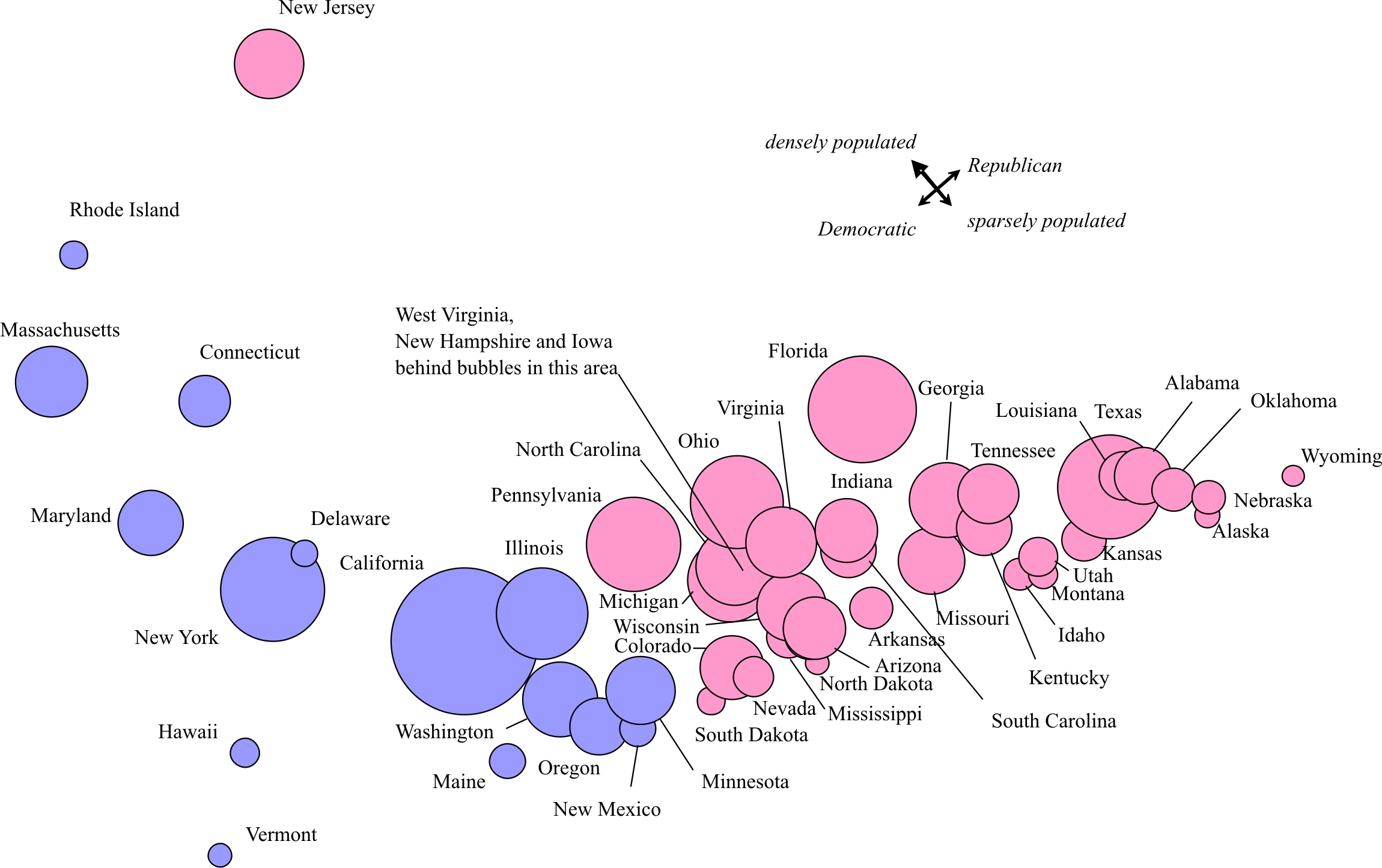
U.S. States in Political Space. This is the 2010 Congressional election, tabulated for total House of Representatives votes cast in November, 2010. States are mapped by population density and vote shares (including the small shares going to parties other than Republicans and Democrats). Map created with classical multidimensional scaling routine. Votes cast for Democratic House candidates exceed those for Republican candidates in states shaded Blue, while the opposite applies in pink states. Circle areas are scaled proportionate to total votes cast by state. Data Sources: Karen L. Haas (2011). Statistics of the Congressional Election of November 2, 2010. Corrected to June 3, 2011. Washington, DC: Office of the Clerk of the U.S. House of Representatives. U.S. Bureau of the Census (2010). Interim Population Estimates for States. Washington, DC: U.S. Department of Commerce.
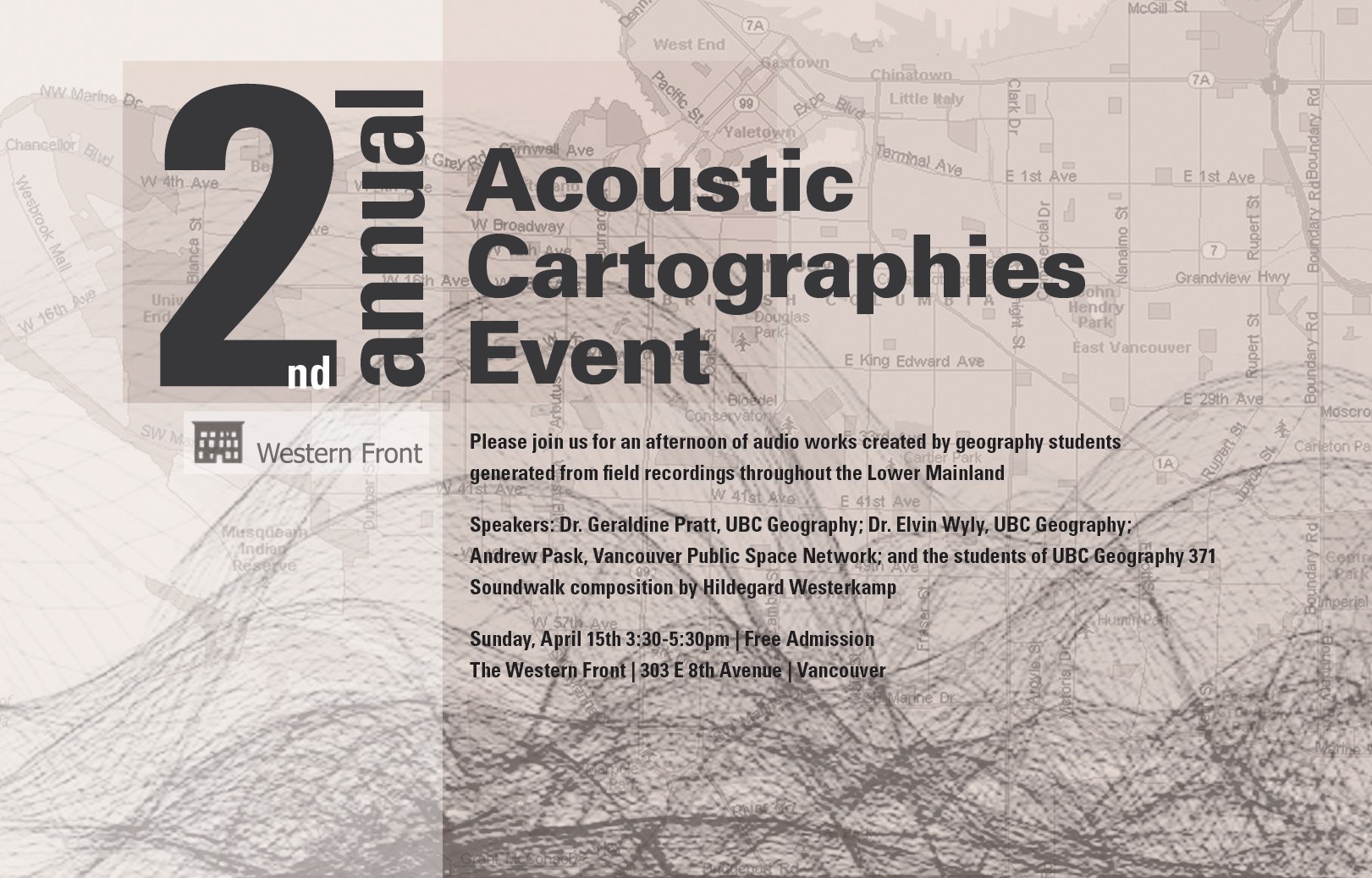
Acoustic Cartographies 2012!
Gerry Pratt, Elizabeth Lee, Andrew Pask, Hildegard Westerkamp, the students of Geography 371 ... and some clown by the name of Wyly
Sunday, April 15, 3:30-5:30 PM, Western Front, 303 E. 8th Avenue.
What a great event! Andrew Pask, Gerry Pratt, Liz Lee, and many other wonderfully thoughtful, creative colleagues and students. Thank you so much for the brainstorm! My notes are here. They probably don't make any sense at all ... unless you were there ... and you can make sense of my writing ... and your mind can see where mine is going ... yikes! But feel free to use this as an icebreaker, if you see me walking down the hall and you want to start a conversation. "What did you mean by this crazy scribble here?"
Like you, I'm always carefully listening to the sounds of daily life in the city. But no matter what sound I hear right now in this city, there's always several other sounds in the back of my mind. Some are the voices of mentors, some the voices of students. Then the scribble at the top of the page about the rhythm of the traffic in the city indicates that some of what we discussed reminded me of the geographical imaginations of pop culture in the latter decades of the twentieth century. This is what I sometimes hear in the back of my mind. Whaddya think? Cheesy? Or maybe it's so obscure and out of date by now that it's kinda campy-cool? If you're interested, here's another tiny sample of my cognitive soundtrack, and then here's my "City Wanna Make me Holler" reflection.

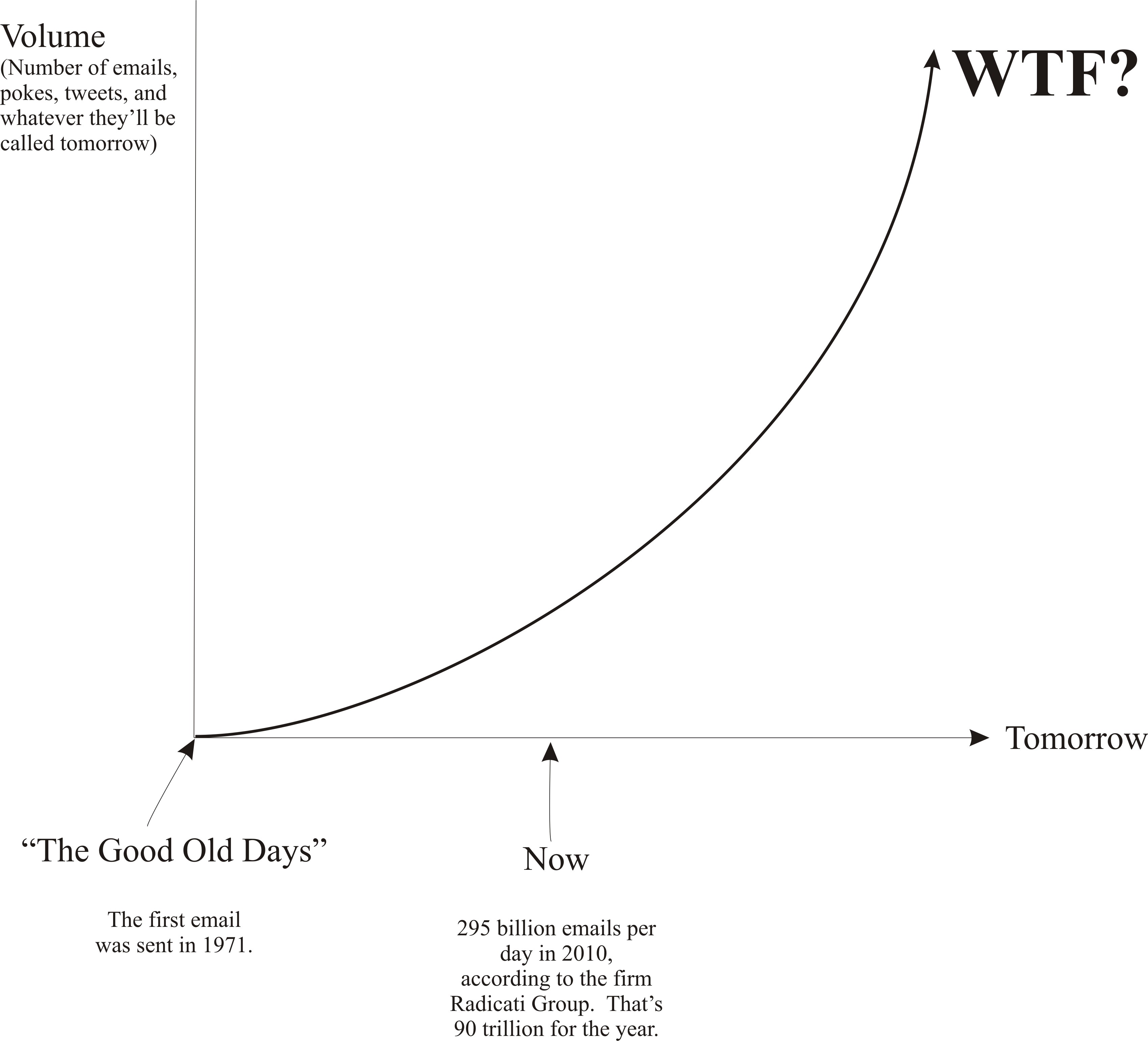

Mapping continuity and change in Canada's settlement system
with Markus Moos, Anna Glasmacher, and other colleagues.
[click for larger, monstrous file]
"To think collectively is countercultural in the current economic and political environment." This department is "an extraordinary collectivity," with unparalleled "excellence of faculty, graduate students, undergraduates, staff, and alumni."
Indeed!
David Ley (2012). Final Head's Remarks, last Department Meeting of the Headship, May 24. Vancouver, BC: Department of Geography, University of British Columbia.
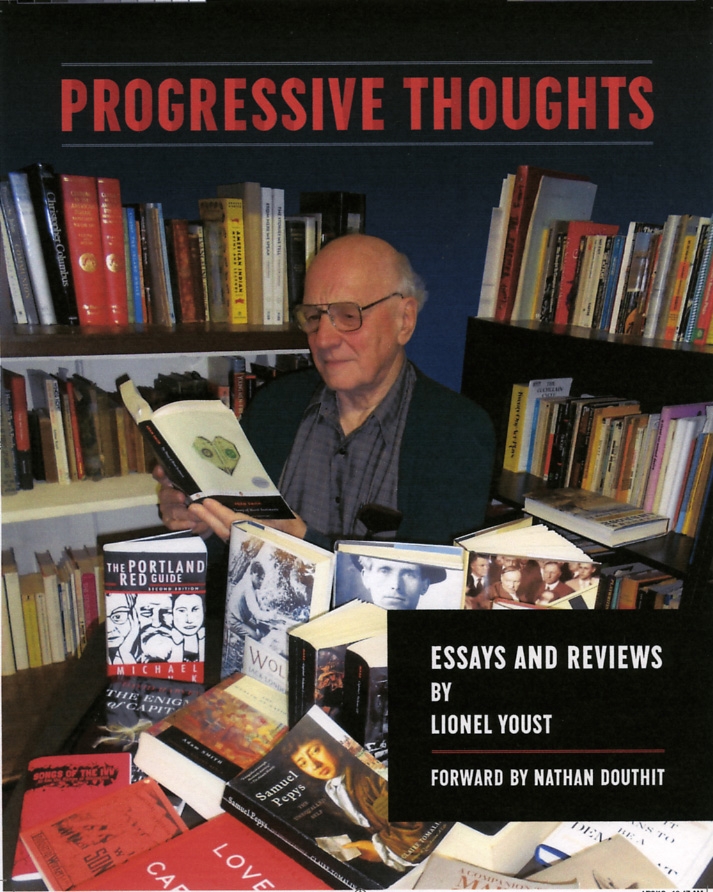
"In this delightful collection of thoughtful reviews, Lionel Youst gives us valuable historical perspective -- and inspiration to build a progressive future of social justice."
Elvin Wyly
Associate Professor, Urban Geography
University of British Columbia
The book should be on Amazon shortly; link to be updated whenever possible.
Lionel Youst (2012). Progressive Thoughts: Essays and Reviews, by Lionel Youst. Allegany, Oregon: Golden Falls Publishing.